



From tools to teammates: how AI Agents are redefining the role of developers
AI & Modern Engineering Practices
AI is no longer just writing code or suggesting snippets, it is becoming a teammate. This article explains how AI agents are evolving from productivity tools into autonomous collaborators, with real-world use cases across DevOps, SRE and platform engineering, and the cultural, technical and ethical implications of treating AI as teammates rather than tools.
If you are a CTO, tech lead or engineer navigating the future of software engineering and DevOps, this article shows how AI agents are reshaping collaboration, team dynamics and software quality, without replacing human creativity or accountability.
Over the last decade, developers have seen AI evolve from simple autocomplete features into copilots embedded in IDEs and workflows.
In 2025, however, a deeper shift is underway. AI agents are no longer limited to reactive assistance. They are increasingly capable of autonomous action, decision-making, and collaboration within real engineering systems.
And that changes how software is built, operated, and owned. This transition marks a move from AI as a tool to AI as an active participant in engineering teams.
Welcome to the era of autonomous AI agents
Modern AI agents, powered by frontier models such as GPT-4o, Claude 3, and systems like ACE Dev, can now:
Interact with APIs, internal tools, and cloud infrastructure in real time.
Synthesize data from multiple systems to inform decisions.
Act based on goals, constraints, and conditions rather than static prompts.
Learn from developer behavior and operational feedback over time.
This goes beyond automation into delegation.
The key difference is intent. Traditional automation executes predefined steps. Agentic systems interpret context, assess trade-offs, and decide when and how to act. This is why AI agents are beginning to resemble collaborators rather than scripts.
Developers, meet your new teammates
In many cloud-native organizations, AI agents are already embedded into daily workflows. Today, they commonly act as:
Deployment agents managing rollouts, rollbacks, and environment consistency.
Monitoring analysts summarizing logs, detecting anomalies, and suggesting remediation.
Documentation assistants generating context-aware technical documentation.
Code reviewers identifying bugs, security risks, and performance issues.
SRE helpers triaging incidents before human escalation.
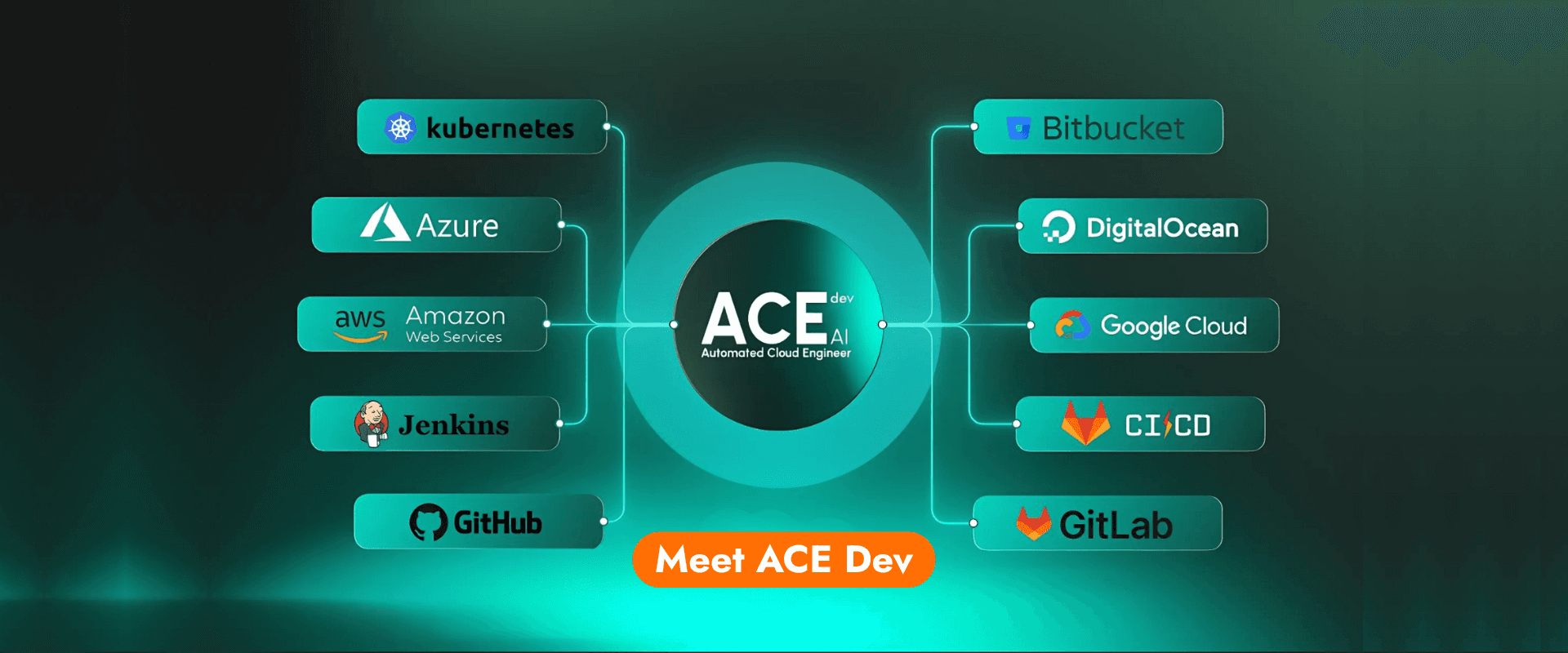
At EZOps Cloud, we have seen this evolution firsthand with ACE Dev, our Automated Cloud Engineer. ACE Dev works as a GenAI-powered DevOps agent, not a chatbot, designed to operate across cloud and infrastructure workflows with contextual awareness.
Instead of executing static scripts, ACE Dev evaluates configurations, detects inefficiencies, and collaborates with engineers through tools like Slack to help close incidents faster.
This is what “AI as teammate” looks like in practice: embedded, accountable, and operational.
The cultural shift: from human-tool interaction to human-agent collaboration
This technical shift triggers an equally important cultural transformation. When AI begins to behave like a collaborator, teams must rethink how they work.
The line between tool and teammate blurs. Developers are no longer just writing code. They are orchestrating systems that include autonomous agents.
This requires:
Clear onboarding for agents (capabilities, limits, escalation paths).
Defined responsibility models (when humans override, who owns outcomes).
Cultural integration (trust, transparency, and shared rituals).
For leaders, this is a strategic inflection point. Teams that treat AI agents as static tools will struggle. Teams that integrate them as evolving collaborators gain leverage, velocity, and resilience.
The developer's role is evolving, not disappearing
One of the most persistent fears around AI is replacement. In reality, AI agents are redefining where human value lies, rather than replacing developers.
In agentic environments, developers shift from:
Writing syntax to designing architectures and constraints.
Debugging errors to debugging intent and system behavior.
Repeating tasks to mentoring, supervising, and refining agents.
Managing infrastructure to managing outcomes and reliability.
Developers increasingly act as technical directors, coordinating both human and non-human contributors toward shared goals.
Ethical and strategic considerations of AI teammates
With autonomy comes risk. Allowing AI agents to act independently raises non-trivial concerns:
Security: preventing unauthorized or unsafe actions.
Transparency: understanding why an agent made a decision.
Bias and hallucinations: mitigating flawed reasoning.
Accountability: defining when humans must intervene.
These risks are not theoretical. In production systems, an unchecked agent can cause outages, data exposure, or cost explosions.
This is why governance matters. AI agents require guardrails: audit logs, approval workflows, policy constraints, and human-in-the-loop escalation.
A real-world example: from reactive support to proactive operations
At EZOps Cloud, AI agents have already reshaped how we operate.
Before:
Alerts triggered human triage.
Engineers diagnosed issues manually.
Postmortems were written after incidents.
Now:
ACE Dev detects anomalies using real-time monitoring.
It auto-triages based on context and predefined protocols.
It proposes remediation, opens tickets, and attaches logs and options.
The result is fewer escalations, faster recovery, and more cognitive space for engineers to focus on architecture and improvement rather than firefighting.
Preparing your team for the AI teammate era
To navigate this transition effectively, tech leaders should focus on five concrete steps:
1. Audit your workflows. Identify repetitive, rule-based tasks suitable for delegation.
2. Educate your team. Teach engineers how to interact with agents and validate outputs.
3. Define boundaries. Start with low-risk environments and clear autonomy limits.
4. Pilot intentionally. Test in staging before expanding into production.
5. Foster collaboration. Position AI as a partner, not a competitor.
FAQ
Q1. Are AI agents replacing software developers?
No. AI agents take on repetitive, rule-based tasks like triage and documentation, while developers shift toward designing architectures, supervising agents and owning outcomes.
Q2. What risks come with giving AI agents more autonomy?
Security exposure, lack of transparency in decision-making, bias or hallucinations, and unclear accountability if something goes wrong without proper guardrails.
Q3. How should a team start adopting AI agents safely?
Audit workflows for repetitive tasks, educate the team on validating agent outputs, define clear autonomy boundaries, pilot in staging first and treat AI as a collaborator, not a competitor.
Q4. What does ACE Dev do differently from a chatbot?
It evaluates configurations, detects inefficiencies and collaborates with engineers through tools like Slack to help close incidents faster, instead of just answering questions.
Final thoughts: developers are being augmented, not replaced
The rise of AI agents is a force multiplier, not a threat. Just as version control, CI/CD, and cloud platforms changed software development, AI agents are changing who developers collaborate with.
Organizations that adapt early will build faster, operate more reliably, and innovate more deeply. At EZOps Cloud, we believe the future of DevOps is about better teammates, not more tools. And some of them will be AI.

EZOps Cloud delivers secure and efficient Cloud and DevOps solutions worldwide, backed by a proven track record and a team of real experts dedicated to your growth, making us a top choice in the field.
EZOps Cloud. Soluções de Cloud e DevOps unindo expertise e inovação.
