

8 cloud improvements you can achieve with AI this year
AI & Modern Engineering Practices
AI is already reshaping cloud operations. From automating CI/CD to forecasting cloud costs, AI tools are quickly becoming foundational to how companies scale securely and cost-effectively, and this article breaks down eight practical improvements CTOs, DevOps leaders and cloud engineers can prioritize this year, with real examples of where AI delivers the most impact and how to stay competitive in a cloud-native, AI-assisted world.
This shift is happening across the board. Startups and SMBs are tapping into AI capabilities across their stacks to accelerate delivery, cut cloud waste and enforce security protocols that were previously out of reach.
1. Faster, safer deployments with AI-powered CI/CD
AI-driven CI/CD pipelines are helping DevOps teams release more often and with fewer errors.
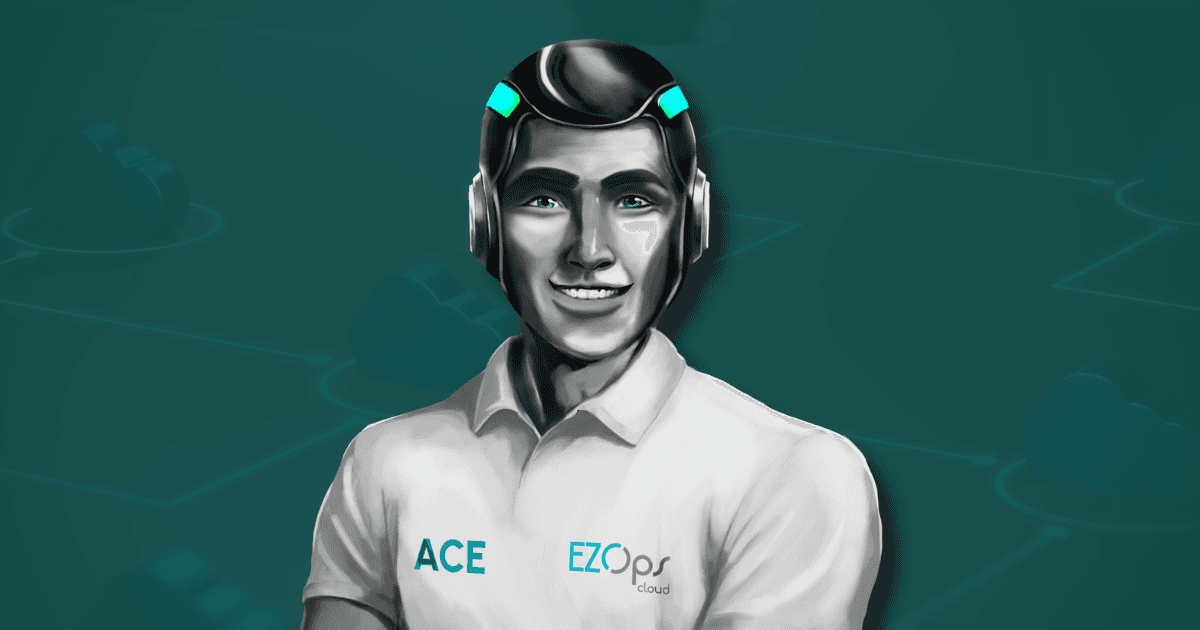
At EZOps Cloud, our AI agent ACE Dev automates detection and diagnosis across deployment processes, including recommending rollback strategies and validating security configurations in real time.
Impact:
Up to 30-50% faster release cycles.
Reduction in manual configuration errors.
Smarter rollback recommendations using pattern recognition from previous builds.
This is intelligent, context-aware decision-making injected into your pipeline.
2. Real-time cloud cost optimization and forecasting
Cloud overspend continues to be a top concern for CTOs. AI-powered tools now offer real-time cost forecasting and dynamic allocation based on actual usage and demand.
What ACE Dev does at EZOps Cloud:
Predicts cost spikes before they happen.
Suggests changes to autoscaling groups and instance types.
Flags unused storage volumes or idle services.
Result: clients have seen cost reductions of up to 30% while maintaining or improving performance.
3. Intelligent cloud monitoring and anomaly detection
Traditional monitoring relies on thresholds and rules. AI monitoring tools analyze vast telemetry data, detect anomalies early and recommend proactive actions.
What ACE Dev adds:
Detects misconfigurations, unhealthy services and permission issues.
Suggests infrastructure changes (with diffs).
Surfaces actionable diagnosis and alerts engineers when thresholds are breached.
For lead engineers and CTOs, this means avoiding alert fatigue while preserving uptime. AI monitoring replaces noise with actionable insight.
4. Zero Trust security enforcement by default
Manual security configurations do not scale. AI helps enforce Zero Trust architectures by default, continuously scanning for drift and enforcing least-privilege principles.
What ACE Dev does:
Scans IAM policies for privilege escalation risks.
Detects open ports or public resources (e.g., unsecured Amazon S3 buckets.
Recommends and prepares fixes, logging every action for audit.
Industry data shows that a significant majority of data leaks in cloud environments stem from misconfigured storage or privilege issues. AI closes these gaps before they reach production.
5. Agentic automation of documentation and audits
AI agents now handle one of the most time-consuming DevOps tasks: documentation.
What ACE Dev generates:
Full architecture maps and live infrastructure diagrams.
Change logs for every deployment.
Access audits and compliance reports.
When your AI agent documents and justifies every change in real time, you gain both clarity and compliance.
6. Smarter incident response
Intelligent agents assist in diagnosing root causes and ranking remediation paths, compressing detection-to-resolution into the same event window.
Use case: in one of our demos, ACE Dev identified a 503 error in a Kubernetes application caused by a load balancer misconfiguration. It surfaced the diagnosis and recommended the fix in under 3 minutes, before the on-call engineer opened the dashboard.
AI amplifies your incident response team, making them faster and more precise.
7. AI-assisted dev onboarding and knowledge sharing
Cloud environments are complex and ramping up new engineers is expensive. AI agents now assist in knowledge transfer and infrastructure exploration.
What this looks like in practice:
AI answers “where is X deployed” or “who has access to Y.”
Generates mini runbooks on-demand for internal tools.
Explains policies and configurations in human language.
For CTOs hiring rapidly, AI-driven onboarding reduces the time from first login to first contribution.
8. Governance automation with policy-as-code
AI is now helping organizations write, test and apply policies as code across their cloud infrastructure, including cost controls, security rules and resource tagging standards.
With ACE Dev, you get:
Policy enforcement before deployment.
Reconciliation of drift post-deployment.
Alerts for violations across teams and projects.
Governance becomes a built-in feature of your delivery process rather than a bottleneck.
FAQ
Q1. What cloud improvements can AI deliver this year?
Faster CI/CD releases, real-time cost forecasting, intelligent anomaly detection, Zero Trust enforcement by default, automated documentation and audits, faster incident response, AI-assisted onboarding and policy-as-code governance.
Q2. Does AI replace the need for a DevOps or SRE team?
No. AI agents like ACE Dev detect, diagnose and recommend actions, but engineers validate and execute changes before they reach production.
Q3. How does AI help enforce Zero Trust in the cloud?
By continuously scanning for configuration drift, flagging privilege escalation risks and detecting exposed resources such as public storage buckets, then recommending fixes before they reach production.
Q4. What is the fastest place to start applying AI to cloud operations?
CI/CD and cost forecasting tend to show impact first, since both rely on pattern recognition over data teams are already collecting.
Final thoughts
AI will not solve every cloud problem overnight. But the companies advancing in this space are those using AI as a decision-making layer in their DevOps strategy.
At EZOps Cloud, we built ACE Dev for this exact reason: to create systems that scale, protect themselves and help your team build better software.
Ready to make your infrastructure more intelligent by design? Talk to our team and see how ACE Dev can help you implement AI improvements that deliver real results.
EZOps Cloud delivers secure and efficient Cloud and DevOps solutions worldwide, backed by a proven track record and a team of real experts dedicated to your growth, making us a top choice in the field.
EZOps Cloud: Cloud and DevOps merging expertise and innovation