


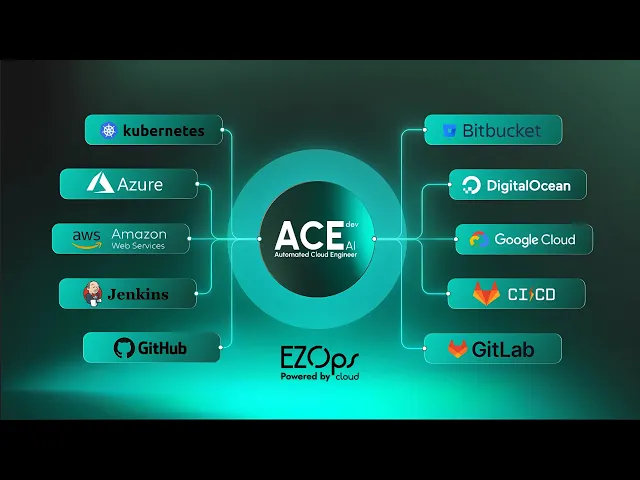
Context-aware automation: why AI needs DevOps to work in production
AI & Modern Engineering Practices
What you’ll find in this article: why AI automation fails in real engineering environments, how context-aware automation differs from generic automation, and why DevOps is essential to make AI automation reliable and scalable.
Why read this article: if AI automation looks impressive in demos but unstable in production, this article explains why that gap exists and how DevOps provides the operational context that turns automation into a dependable, auditable engineering capability.
Why AI automation often breaks in production
Automation has always been one of the core promises of artificial intelligence. The idea that machines can take over repetitive tasks, reduce human error, and accelerate delivery is deeply attractive, especially in engineering environments under constant pressure to do more with fewer resources.
Yet, in practice, many AI-powered automation initiatives collapse once they leave controlled environments. They perform well in demos, but struggle in production. Actions trigger at the wrong time, costs rise unexpectedly, and confidence erodes as engineers quietly revert to manual processes.
The issue is not automation itself. It is automation without context.
Most AI systems are deployed with only a superficial understanding of the environments they operate in. They lack awareness of infrastructure dependencies, deployment history, security boundaries, and business priorities. As a result, they behave correctly in isolation but unpredictably in real systems.
To understand why this pattern repeats so often, we need to look more closely at what “automation without context” actually looks like in day-to-day engineering work.
What automation without context really looks like
In practice, automation without context rarely fails in dramatic ways. Instead, it fails quietly and incrementally. Tasks execute without awareness of downstream impact. Automated scripts ignore system load, deployment windows, or operational risk. Decisions are made without considering historical behavior or organizational constraints.
What was designed to reduce friction ends up introducing subtle instability. Over time, engineers stop trusting automation. They double-check outputs, add manual overrides, or avoid automated paths altogether. Instead of reducing cognitive load, automation becomes another system that needs constant supervision.
This erosion of trust raises an important question: what changes when automation gains real operational context?
Why context changes everything
Context transforms automation from reactive behavior into informed action. When automation understands where it operates, how systems interact, and which constraints matter at a given moment, its behavior becomes predictable rather than surprising.
Context allows automation to factor in infrastructure state, deployment cycles, incident history, security requirements, and cost sensitivity. Predictability is the foundation of trust in engineering environments. Without it, no amount of automation delivers real value.
But context does not appear on its own. It has to come from somewhere and this is where DevOps enters the picture.
DevOps as the source of operational context
DevOps provides the mechanisms through which operational context is captured, preserved, and applied consistently. Infrastructure as Code establishes a shared understanding of system structure. CI/CD pipelines define how changes move through environments. Observability connects actions to outcomes, revealing not only what happened, but why it happened.
When AI-driven automation is layered on top of this foundation, it stops operating blindly. Every automated action becomes traceable. Every decision can be audited. Every outcome can be reviewed. This shift has a direct impact on how engineers perceive automation and whether they choose to trust it.
Why engineers resist automation that lacks context
Resistance to automation is often misinterpreted as fear of change or fear of replacement. In reality, experienced engineers resist automation because they understand its risks.
They have seen automation introduce silent failures, hidden costs, and brittle workflows. They have been responsible for stabilizing systems when automation behaved unpredictably.
Context-aware automation changes this dynamic. When automation respects system boundaries and operational knowledge, engineers regain confidence. At this point, automation stops being a threat and starts behaving like an extension of engineering judgment.
Automation as an extension of engineering judgment
The most effective automation does not bypass human expertise. It encodes it. Contextual automation captures decisions engineers have already made and applies them consistently. It reflects best practices, historical insights, and organizational standards, reducing variability without removing accountability.
Humans remain responsible for intent. Automation ensures execution remains aligned with that intent.
This distinction becomes especially important when considering why generic AI tools struggle to deliver consistent results.
Why generic AI tools struggle with context
Generic AI tools are designed to work everywhere, which often means they deeply understand nowhere. They lack awareness of how your systems are built, how your teams operate, and how risk is managed.
Their abstractions rarely align with operational reality, which limits their effectiveness in complex environments. Context cannot be added as an afterthought. It must be designed into automation from the start, grounded in DevOps principles.
From fragile workflows to dependable systems
As automation becomes contextualized, workflows become calmer rather than more chaotic. Exceptions decrease. Incidents become easier to diagnose. Infrastructure usage aligns more closely with demand.
Teams move away from constant firefighting and toward deliberate improvement. Automation fades into the background, quietly doing its job instead of demanding attention. This reliability is what ultimately unlocks real return on investment.
Why contextual automation delivers real ROI
ROI from automation does not come from volume alone. It comes from consistency. When automation behaves reliably, teams spend less time fixing what automation broke. Trust compounds. Operational waste declines. Decisions become easier to justify.
Contextual automation also improves cost discipline. Actions happen when they are needed, not simply because they are possible. At this stage, automation stops being experimental and becomes strategic.

Final perspective
Automation on its own does not create leverage. Automation with context does. DevOps supplies that context, ensuring AI-powered automation operates within real systems, real constraints, and real priorities.
Together, they transform automation from a risky experiment into a durable engineering capability. This approach may not be the fastest path to automation, but it is the one that lasts.

EZOps Cloud delivers secure and efficient Cloud and DevOps solutions worldwide, backed by a proven track record and a team of real experts dedicated to your growth, making us a top choice in the field.
EZOps Cloud: Cloud and DevOps merging expertise and innovation