



Vibe Coding: how to program with AI while keeping your developer identity
AI & Modern Engineering Practices
What you’ll find in this article: a clear, experience-based explanation of vibe coding, what it means in practice, how it works with modern AI tools, its real benefits and risks, and how developers can use it responsibly without losing technical ownership.
Why read this article: If you’re a developer or tech leader navigating AI-assisted programming, this article helps you understand how vibe coding changes the way we write software and how to stay in control while moving faster.
In early 2025, AI researcher Andrej Karpathy introduced a term that quickly ignited debate across the programming community: vibe coding. With a short post describing a workflow where developers could “fully give in to the vibes, embrace exponentials, and forget that the code even exists,” Karpathy named a behavior many developers were already practicing, but hadn’t yet articulated.
So what exactly is vibe coding? Is it the future of software development, or a risky shortcut that could lead to a generation of developers who don’t truly understand the systems they build? As with most technological shifts, the answer isn’t binary. It’s nuanced.
The birth of a new programming paradigm
Vibe coding didn’t emerge in isolation. It’s the natural evolution of AI-assisted development tools that have been steadily improving over the past few years.
Early tools like GitHub Copilot functioned largely as advanced autocomplete. The real shift came with large language models such as GPT-4, Claude, and Gemini, which can interpret intent expressed in natural language and translate it into functional, contextual code.
Vibe coding captures this shift precisely. Instead of focusing on syntax and implementation details, developers describe what they want to achieve, and AI handles much of the translation into code. Programming becomes less about writing lines and more about guiding outcomes.
This marks a fundamental change in workflow. Traditionally, developers would decompose problems, research libraries, implement logic, debug, and refactor. With vibe coding, much of this process becomes conversational: intent → implementation → refinement.
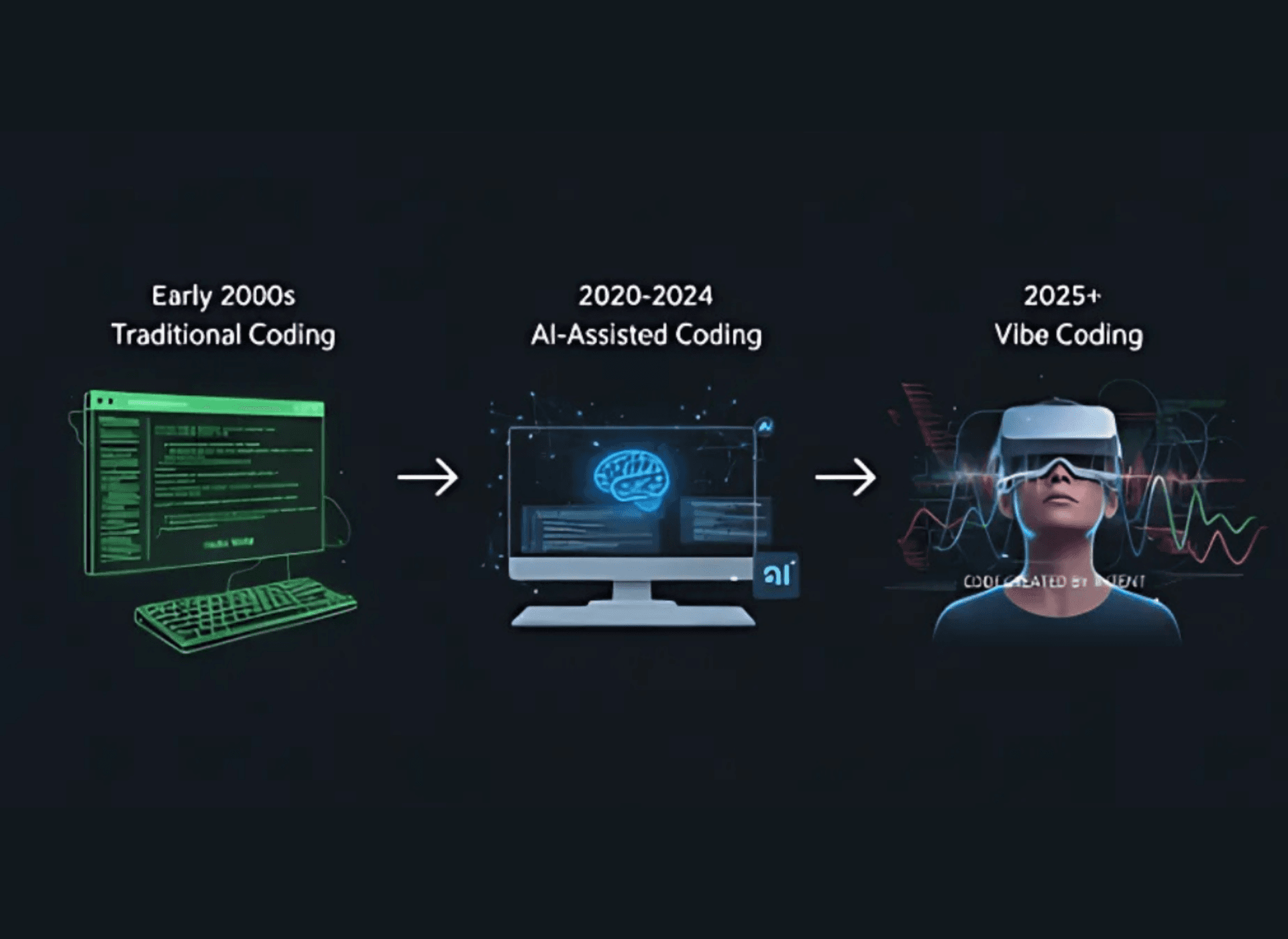
A timeline graphic showing the evolution from traditional coding (early 2000s) to AI-assisted coding (2020-2024) to vibe coding (2025).
What vibe coding really means for developers
At its core, vibe coding shifts the developer’s role from line-by-line author to architect, guide, and reviewer.
The AI becomes an extremely fast and capable collaborator, but one that lacks judgment, context, and accountability. It can generate code quickly, but it doesn’t understand your product constraints, business logic, or long-term maintenance costs.
This approach removes friction from boilerplate and repetitive tasks, allowing developers to think at a higher level of abstraction. However, it also introduces a new responsibility: maintaining deep understanding of code you didn’t directly write.
That trade-off is where vibe coding either empowers or weakens developers.
Two paths: how teams are using vibe coding
As vibe coding gained traction, two clear approaches emerged.
The “pure” vibe coders
This group prioritizes speed above all else. Vibe coding is used for rapid prototyping, MVPs, internal tools, and experimental projects. Code quality and long-term maintainability take a back seat to validation speed.
This approach has enabled non-technical founders, designers, and product managers to build functional applications in record time. In early-stage environments, this can be a legitimate competitive advantage.
The risk is obvious: code becomes disposable, understanding shallow, and long-term sustainability uncertain.
Responsible AI-assisted developers
The second group treats vibe coding as pair programming with an extremely fast junior. AI accelerates implementation, but humans retain architectural control, review every line, and refactor aggressively.
These teams use AI where it shines - CRUD logic, scaffolding, integrations - and rely on human judgment for security, performance, and system design.
This approach consistently produces better long-term outcomes.
Where vibe coding delivers real value
Despite the controversy, vibe coding has spread because it delivers tangible benefits.
Faster iteration cycles, especially in early development.
Democratization of software creation across roles.
More focus on architecture and UX for senior developers.
Reduced cognitive load from repetitive coding.
When used well, vibe coding doesn’t replace engineering skill, it amplifies it.
The responsible AI-assisted developers -
The measured approach
This group takes a more measured approach, treating AI as a sophisticated pair programming partner. They use vibe coding to accelerate development cycles and handle boilerplate code, but maintain strict oversight and ownership of the final product.
Responsible AI-assisted developers recognize the power of vibe coding but also understand its limitations and risks. They use AI to generate initial implementations, but they read through every line, understand the approach taken, and often refactor or optimize the result. They treat AI-generated code as a starting point, not a final solution.
Understanding AI's strengths and weaknesses
These developers have found that AI excels at certain types of tasks while struggling with others. AI is excellent at generating standard CRUD operations, setting up common architectural patterns, creating user interface components, and implementing well-established algorithms. However, it often struggles with complex business logic, performance optimization, security considerations, and integration with existing systems.
The responsible philosophy emphasizes that AI amplifies human capabilities but never replaces human judgment. These developers see themselves as the architects and AI as the construction crew, capable of building to specifications but requiring clear direction and quality oversight.
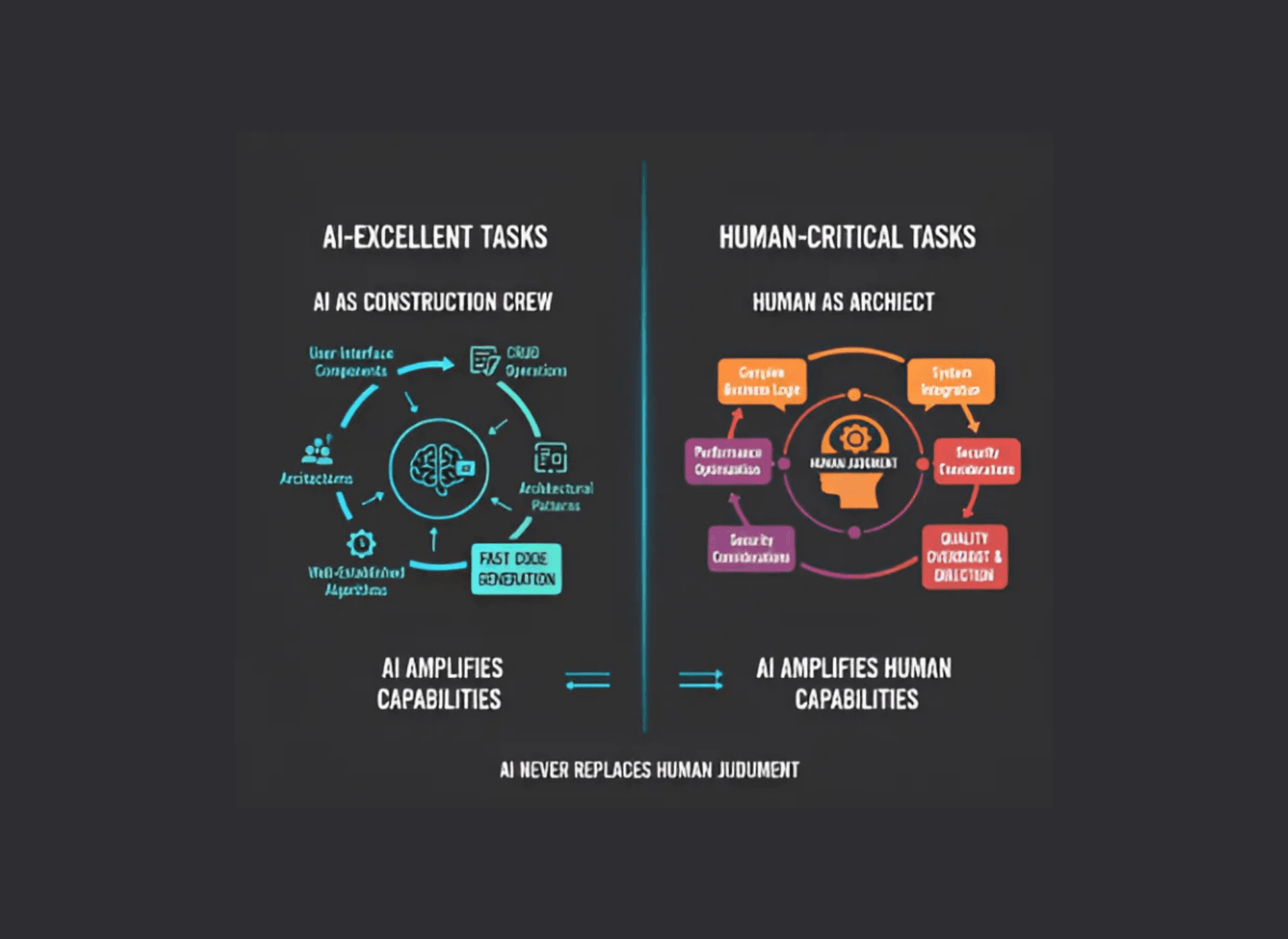
A comparison infographic showing the two approaches side by side, with visual representations of their different workflows and outcomes.
The sweet spot: benefits that changed everything
Despite the controversy, vibe coding's rapid adoption is no accident. It offers genuine advantages that have transformed how many developers work.
Accelerated development cycles
Projects that once took weeks can now be prototyped in days or even hours. This acceleration is particularly valuable in the early stages of development when speed of iteration matters more than code perfection. Startups can test multiple product directions quickly, enterprises can prototype solutions before committing resources, and individual developers can explore ideas that would have been too time-intensive to pursue.
Democratized programming
The democratization of programming has opened new possibilities across organizations. Designers can now create functional prototypes that go far beyond static mockups, allowing them to test interaction patterns and user flows in real applications. Product managers can build demos that accurately represent complex features, improving communication with both stakeholders and development teams. Domain experts in fields like finance, healthcare, and scientific research can create tools tailored to their specific needs without requiring extensive programming background.
Enhanced creative problem-solving
Enhanced creative problem-solving emerges when the friction of syntax and boilerplate code is removed. Developers report being able to focus more on user experience and innovative solutions rather than getting stuck on implementation details. This is particularly valuable in creative coding, data visualization, and experimental interfaces where the focus should be on the end result rather than the technical mechanics.
Improved focus on high-level architecture
The improvement in focus on high-level architecture has transformed how experienced developers spend their time. When AI handles routine implementation tasks, senior developers can dedicate more attention to system design, technology selection, performance planning, and strategic technical decisions. This shift allows organizations to better utilize their most experienced developers' expertise.
The dark side of the Vibe: real risks and valid concerns
The criticism of vibe coding isn't just conservative resistance to change. There are legitimate concerns about its potential negative impact on the profession and software quality.
The de-skilling crisis
The de-skilling crisis represents perhaps the most serious long-term concern. Programming isn't just about producing working code, it's about developing logical thinking, debugging abilities, and understanding how systems work at a fundamental level. When developers rely too heavily on AI to generate code, they may miss crucial learning opportunities that come from wrestling with problems, making mistakes, and finding solutions through trial and error.
This risk is particularly acute for junior developers who may never develop the problem-solving instincts that come from writing code from scratch. There's a difference between understanding code well enough to review it and understanding it well enough to create it. The former is valuable, but the latter develops deeper intuition about system behavior, performance implications, and potential failure modes.
Technical debt and maintenance nightmares
Technical debt and maintenance nightmares represent an immediate practical concern. AI-generated code often works perfectly for the intended use case but may be bloated, inefficient, or difficult to extend. AI models tend to be verbose, often generating more code than necessary and sometimes using outdated patterns or libraries. More problematically, AI-generated code often lacks the clear structure and meaningful comments that human developers provide for future maintainers.
The reality is that code is read far more often than it's written. If a development team can't understand and maintain AI-generated code, they're building technical debt that will compound over time. This is especially problematic in long-term projects where the original developers may no longer be available to explain AI-generated implementations.
Security vulnerabilities
Security vulnerabilities pose a particularly insidious risk because they often aren't immediately apparent. AI models don't think like security experts or malicious actors. They can generate code that handles the expected use case perfectly but fails catastrophically when faced with malicious input or edge cases that weren't considered during training.
These vulnerabilities are especially dangerous because they may not be caught by developers who are reviewing code they didn't write and may not fully understand. Traditional security practices rely on developers understanding the implications of their implementation choices, but this breaks down when developers are reviewing AI-generated code without deep understanding of its security properties.
The subtle bug problem
The subtle bug problem may be the most difficult to detect and resolve. AI-generated code may contain logical errors that only manifest under specific conditions or in edge cases. These bugs can be incredibly difficult to track down because they're embedded in code that the human developer didn't write and may not fully understand. When something goes wrong, the debugging process becomes much more complex because the developer must first understand what the AI was trying to do before they can figure out why it's not working correctly.
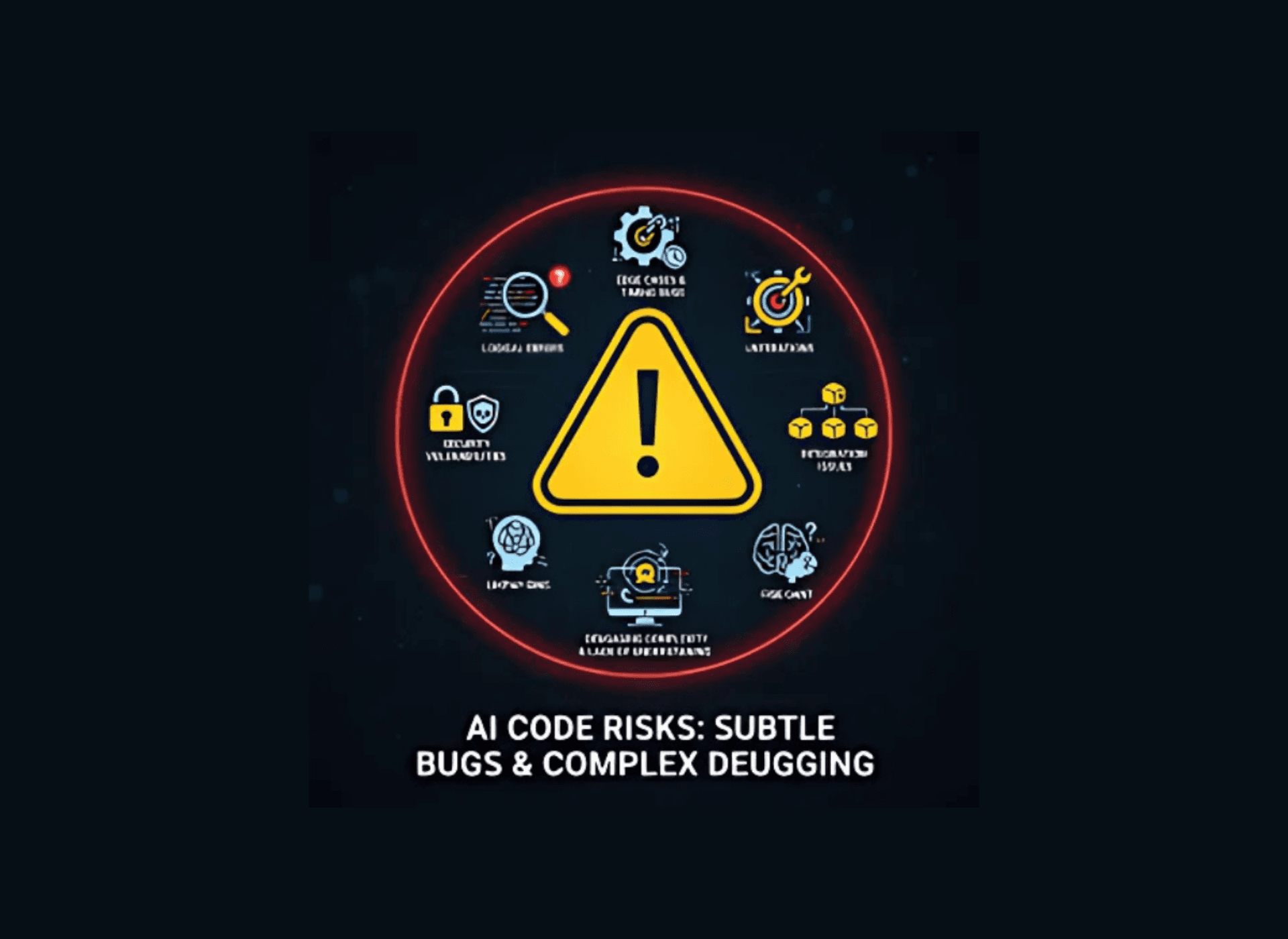
A warning sign or caution symbol with various code-related icons around it, representing the different risks and pitfall.
The middle path: a framework for responsible Vibe Coding
The solution isn't to abandon vibe coding but to use it responsibly. A structured framework allows developers to harness its power while avoiding its pitfalls.
The fundamental mindset shift
The fundamental mindset shift involves thinking of the AI as your incredibly talented but inexperienced intern. Every piece of AI-generated code should be treated as a pull request from someone who's brilliant but needs guidance. You are the senior developer, and you are ultimately responsible for everything that goes into production. This mental model helps maintain the appropriate level of scrutiny while recognizing the value AI can provide.
The five principles of responsible Vibe Coding
Never trust, always verify
The first principle is "Never Trust, Always Verify." This means never committing AI-generated code that you don't fully understand. Every line should be readable and explainable. If you encounter a clever solution you don't recognize, research it until you understand not just what it does but why it works. Test edge cases and error conditions that the AI might not have considered. Validate that the code actually solves the problem correctly, not just that it runs without immediate errors.
You are the debugger
The second principle is "You Are the Debugger." When AI-generated code fails, resist the urge to simply ask the AI to fix it. Instead, use your own debugging skills to identify the root cause. Understand why the failure occurred and what assumptions the AI made that turned out to be incorrect. Only after you understand the problem should you consider using AI to suggest fixes, which you should still understand and verify before implementing. This approach turns debugging sessions into learning opportunities rather than black-box problem solving.
Turn AI output into personal knowledge
The third principle involves turning AI output into personal knowledge. When AI generates clever or unfamiliar solutions, investigate them thoroughly. Look up functions, libraries, or patterns you don't recognize. Understand the underlying principles and trade-offs involved. Add successful techniques to your personal toolkit and share learnings with your team. This approach ensures that working with AI makes you a better developer rather than just a more productive one.
Maintain your core skills
The fourth principle is maintaining your core skills through regular "AI-free" coding sessions. At least once a week, build something from scratch without AI assistance. Solve coding challenges manually, practice debugging and optimization, and keep your fundamental problem-solving muscles strong. This isn't just about maintaining skills you already have, it's about continuing to develop intuition about system behavior that will make you better at directing and reviewing AI-generated code.
Be the architect
The fifth principle emphasizes that you should be the architect. Use vibe coding for implementation, not for architectural decisions. Design your system architecture yourself, define data models and API contracts, and make technology and pattern choices based on your understanding of the requirements and constraints. Then use AI to generate boilerplate code that conforms to your design. This approach ensures that the high-level decisions that most impact system quality and maintainability remain under human control.
Recognizing red flags
Certain scenarios require extra caution when using vibe coding. Security-sensitive code, including authentication, authorization, data encryption, and input validation, should always receive manual review from security-conscious developers. AI models aren't trained to think like attackers, and security vulnerabilities in these areas can have catastrophic consequences.
Performance-critical systems also warrant careful attention because AI often optimizes for correctness over efficiency. High-performance code requires human understanding of algorithmic complexity, memory usage patterns, and system bottlenecks. AI can provide a starting implementation, but optimization typically requires human expertise and profiling.
Large, complex codebases present challenges because AI lacks the context to make informed decisions about how new code should integrate with existing systems. In these environments, AI is more likely to introduce subtle bugs or architectural inconsistencies that only become apparent over time.
Production-critical features that directly impact revenue, user data, or system stability deserve the highest level of human oversight. These are not the place to experiment with new AI-assisted approaches or to cut corners on code review and testing.
Best practices for Vibe Coding teams
Organizations adopting vibe coding need to establish clear guidelines and practices to ensure it's used effectively and safely.
Establishing team guidelines
Code review standards
Code review standards should treat AI-generated code with the same rigor as human-written code, but with additional considerations. Reviewers should be informed when code was AI-generated so they can adjust their review approach accordingly.
This isn't about discrimination against AI code, but recognition that it requires different types of scrutiny. Reviewers should pay extra attention to testing coverage, documentation quality, and integration with existing systems.
Documentation requirements
Documentation requirements become even more important with AI-generated code. Teams should document the prompts used to generate code, especially for complex or non-obvious implementations. Any AI-generated solutions that use unfamiliar patterns or libraries should be explained in comments or documentation. Architecture documentation should remain primarily human-authored to ensure it reflects actual design decisions rather than AI-generated patterns.
Testing standards
Testing standards need to account for the different failure modes of AI-generated code. Comprehensive test coverage becomes crucial because AI code may work perfectly for intended use cases while failing in edge cases that human developers would typically consider. Integration tests are particularly important to catch context mismatches where AI-generated code doesn't properly integrate with existing systems.
Training and development
For junior developers
Training approaches for junior developers must evolve to support learning in an AI-assisted environment. Junior developers should have limited access to vibe coding for non-critical features initially, with emphasis on understanding generated code before using it. Pairing junior developers with experienced mentors helps ensure they learn from AI output rather than just using it. The focus should be on building fundamental skills that will make them better at directing and reviewing AI-generated code.
For senior developers
Senior developers should focus on using AI for boilerplate and repetitive tasks while maintaining expertise in areas where AI struggles, such as architecture, optimization, and security. They need to develop skills in prompt engineering and AI collaboration while leading by example in responsible AI use. This includes being transparent about when and how they use AI assistance and sharing insights about what works well and what doesn't.
The future of programming: evolution, not replacement
Vibe coding represents a pivotal moment in software development, but it's not the end of programming as we know it. Instead, it's the next step in the evolution of human-computer collaboration.
What this means for new developers
For new developers entering the field, the temptation to jump straight into vibe coding should be resisted. Foundation-first learning remains crucial because algorithmic thinking, understanding of data structures, and debugging skills become more valuable, not less, in an AI-assisted world. These fundamentals provide the knowledge base needed to effectively direct AI and critically evaluate its output. Once solid foundations are established, AI becomes an incredible amplifier of capabilities rather than a crutch that prevents skill development.
The future-proofing aspect of this approach cannot be overstated. Developers who understand both the fundamentals and how to work effectively with AI will be the most valuable professionals in the industry. They'll be able to adapt as AI capabilities evolve and take advantage of new tools without being dependent on any particular system or approach.
What this means for experienced developers
Experienced developers find that vibe coding offers an opportunity to focus on higher-level problems and more strategic aspects of software development. Architectural thinking becomes more important when AI handles implementation details, allowing experienced developers to spend more time on system design and technical strategy. Product focus improves when less time is spent debugging syntax errors and more time is available for understanding user needs and building better experiences. Team leadership skills become increasingly valuable as teaching others how to use AI responsibly becomes a crucial capability.
The skills that remain irreplaceable
Even in a vibe coding world, certain human skills remain irreplaceable. Problem decomposition and analysis require understanding of both technical constraints and business requirements that AI cannot fully grasp. System design and architecture decisions involve trade-offs and context that extend beyond what can be captured in training data. User experience and product thinking require empathy and creativity that remain uniquely human. Debugging and optimization require intuition about system behavior that comes from experience. Security and reliability considerations require adversarial thinking that AI models struggle with. Team collaboration and communication remain fundamentally human activities.
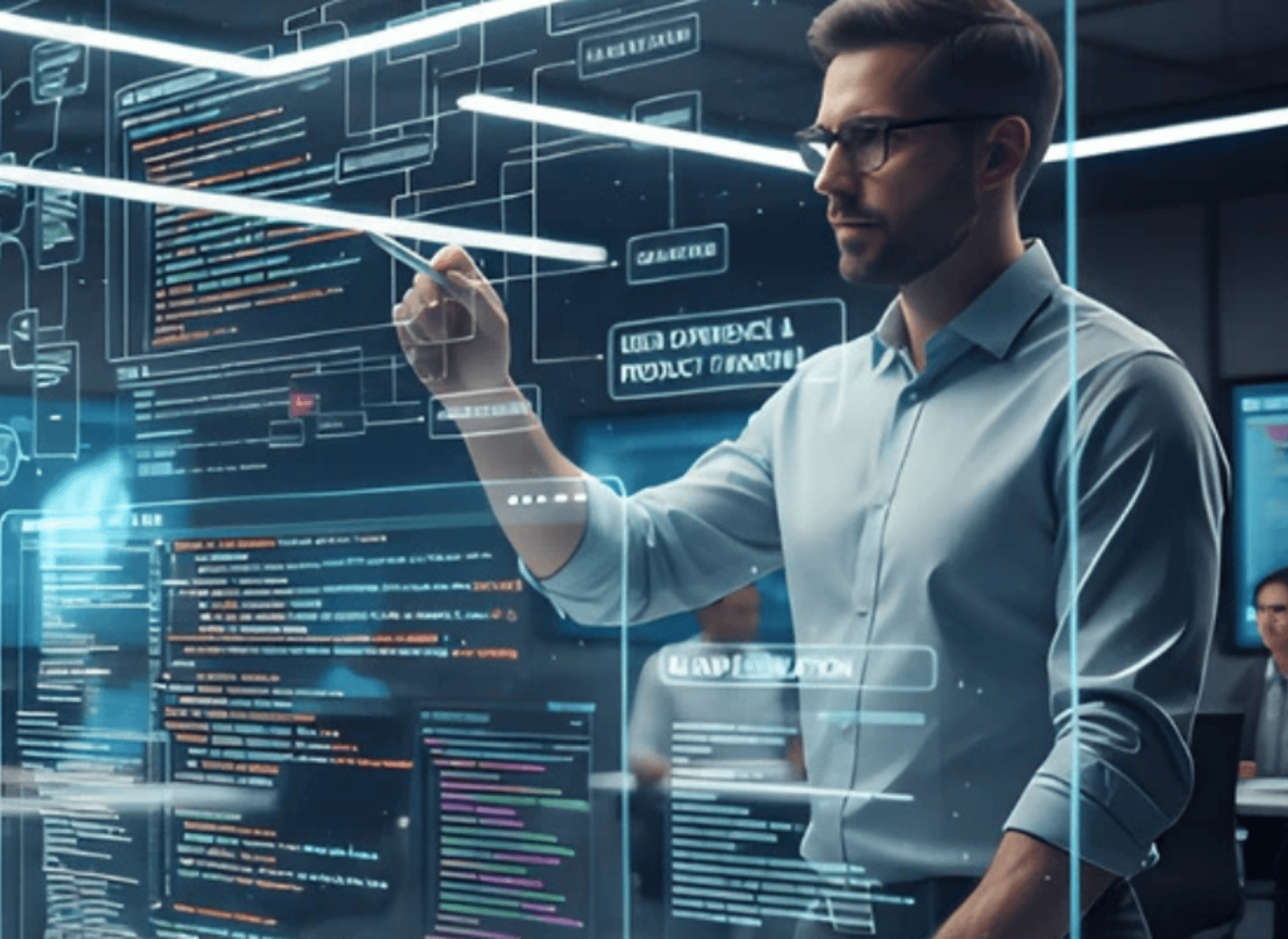
A visual representation of a developer working with AI, showing the human focusing on strategy and architecture while AI handles implementation.
Embracing the Vibe responsibly
Vibe coding isn't going away. The AI capabilities that enable it will only get better, and the pressure to move faster will only increase. The question isn't whether to embrace vibe coding, but how to do it without losing what makes us valuable as developers.
The path forward requires balance. We need to be excited about the possibilities while remaining grounded in the fundamentals. We need to move fast while maintaining quality. We need to embrace AI assistance while preserving human expertise.
The developers who will thrive in this new era are those who master the fundamentals first, providing them with the foundation needed to effectively direct and evaluate AI assistance. They learn to collaborate effectively with AI, understanding its strengths and weaknesses and knowing when to rely on it versus when to take direct control. They maintain strong debugging and problem-solving skills that become even more valuable when working with AI-generated code. They focus on architecture and user experience, areas where human judgment and creativity remain paramount. Most importantly, they stay curious and keep learning, adapting to new tools and techniques while maintaining their core competencies.
Vibe coding represents a new chapter in programming, not its final chapter. By approaching it with wisdom, discipline, and respect for the craft, we can harness its power to build better software, solve harder problems, and create more value for users. The key is remembering that tools should amplify human capabilities, not replace human judgment.
Final thoughts: embracing the vibe without losing yourself
Vibe coding is here to stay. The real question is how we use it. Used carelessly, it erodes skill and ownership. Used responsibly, it unlocks speed, creativity, and leverage.
The future belongs to developers who can collaborate with AI, without surrendering judgment, curiosity, or craft.
The vibe is real. So is the responsibility.

EZOps Cloud delivers secure and efficient Cloud and DevOps solutions worldwide, backed by a proven track record and a team of real experts dedicated to your growth, making us a top choice in the field.
EZOps Cloud: Cloud and DevOps merging expertise and innovation
